

ENVIRONMENTAL PROTECTION AND CLIMATE CHANGE
Uztransgaz JSC is a gas transportation company whose environmental impact is primarily related to the operation of compressor stations, main pipelines, and repair operations.
The company consistently develops an environmental protection system, focusing on pollution prevention, impact mitigation, and the careful use of natural resources in the regions where it operates.
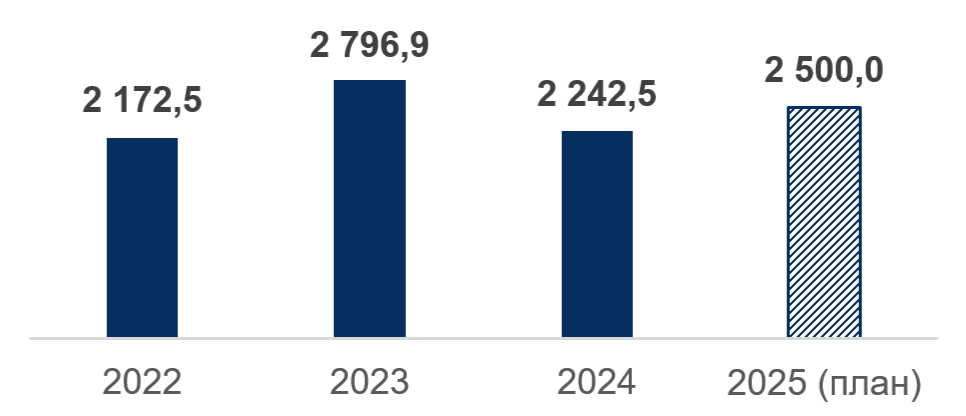
Uztransgaz JSC:
- strictly complies with legislative and regulatory requirements in the field of environmental protection.
- implements modern technologies.
- reduces Emissions and waste generation
- strengthens a culture of environmental responsibility
among employees
Occupational Health and Safety Policy of Uztransgaz JSC

The key document in the area of environmental protection is the Occupational Health and Safety Policy of Uztransgaz JSC. It sets forth the goals and objectives of the Company, as well as the responsibilities of managers and employees in achieving them. The policy establishes uniform principles and assigns responsibility and defines the rules—from planning to monitoring and
continuous improvement of environmental protection practices.
CLIMATE AND ENERGY EFFICIENCY
Uztransgaz JSC is aware of its role in the fight against climate change and strives to structure its work in a way that reduces the burden on the climate and contributes to achieving global climate goals.
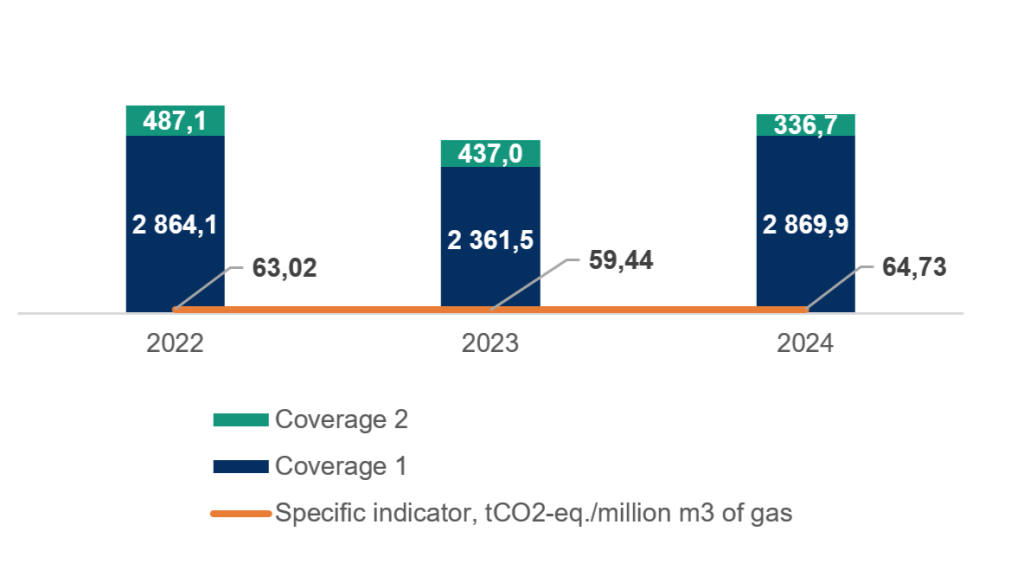
The company systematically tracks its GHG emissions in accordance with international methodologies. UTG is simultaneously developing a climate strategy that will consolidate GHG emission reduction goals through the implementation of a project roadmap. Total direct (scope 1) and indirect energy (scope 2) greenhouse gas emissions in absolute and specific terms, thousand tons of CO2-eq.
Practices of Uztransgaz JSC to reduce methane leaks at compressor stations in partnership with the World Bank
Uztransgaz JSC with the support of the World Bank, Global Flaring and The Methane Reduction Partnership and Vema Carbon are implementing a project to improve energy efficiency and reduce gas losses in the gas transmission system. Since 2023, studies have been conducted to identify gas leaks at the Gallaorol, Yangiyer, and Gazli compressor stations. Large-scale inspections are planned for all remaining compressor stations by the end of 2025.
Methane emissions have already been reduced by 13.9 million m³/year during repairs based on leak monitoring at three compressor stations.
By the end of 2028, the Company plans to comply with OGMP 2.0 Level 4.
Uztransgaz JSC's main energy management goals are to improve energy efficiency through the rational use of energy resources and the introduction and application of energy-saving technologies. The company places particular emphasis on the implementation of renewable energy sources, gradually increasing their share in the total energy used.
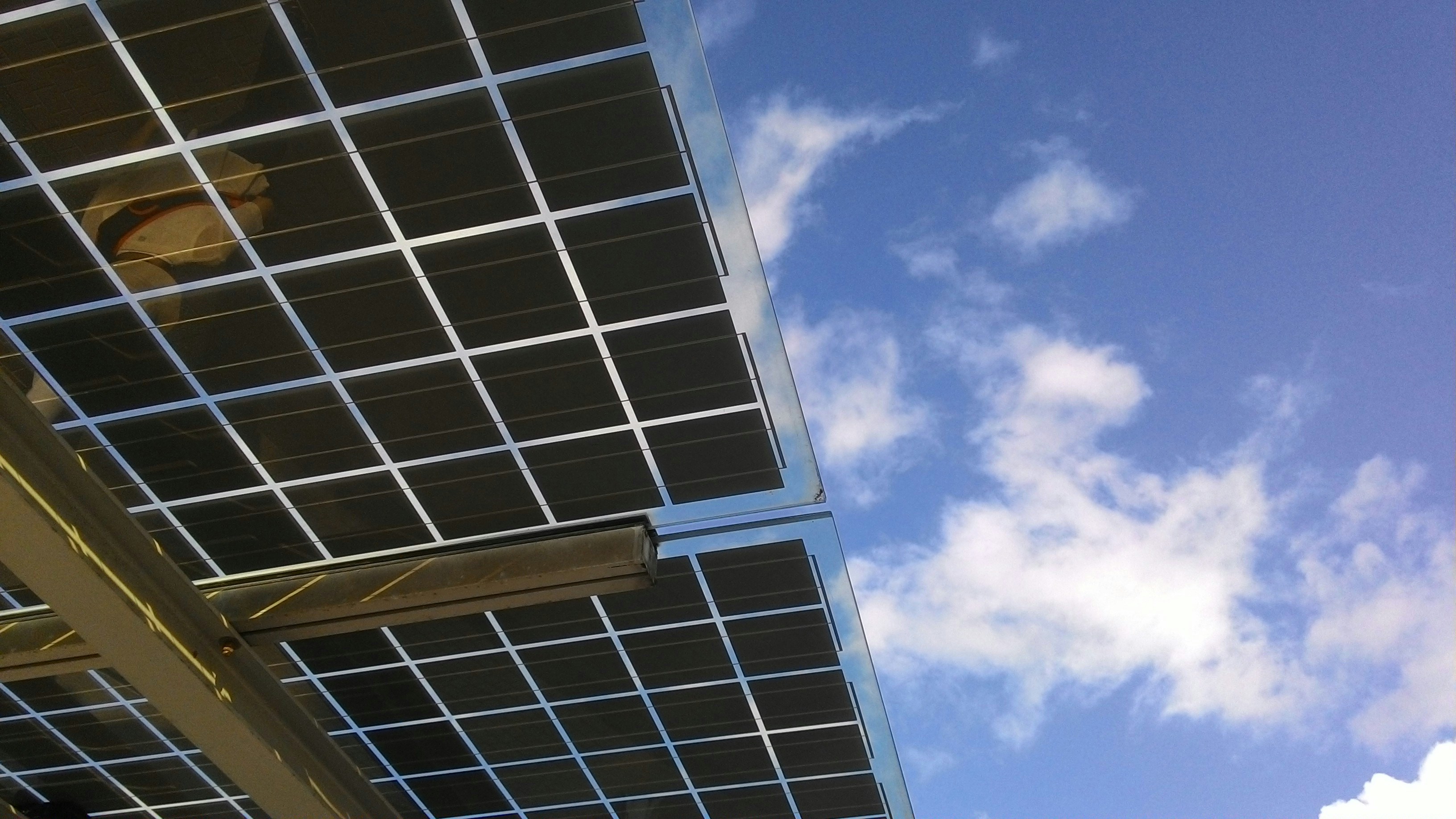
Uztransgaz JSC is constructing solar photovoltaic plants with a total capacity of 50 MW and battery energy storage systems (BESS) with a capacity of 100 MWh at the Gazli, Kogon, Zirabulok, and Yangiyer gas compressor stations.

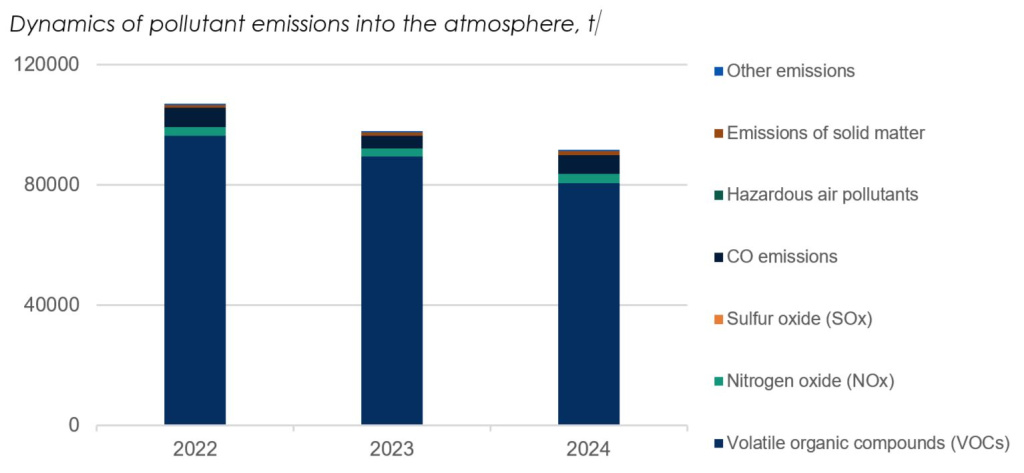
EMISSIONS OF POLLUTANTS INTO THE ATMOSPHERE
The Company intentionally does not conduct a direct assessment of the impact of pollutant emissions on public health. This is due to the need to prevent potential accidents and minimize health risks associated with exposure to pollutants. The Company focuses on implementing preventive measures and strict emission controls aimed at ensuring safety and protecting the health of the population in the areas of its operations.
Uztransgaz JSC plans to equip all main gas pipeline administrations with automatic air quality monitoring stations by the end of 2026. These stations will measure pollutants and meteorological parameters. Monitoring will be continuous and data will be transmitted in real time to environmental specialists at the facilities.

WATER RESOURCES
Uzbekistan is a country with limited water resources. About two-thirds of the facilities in the gas transmission system of JSC Uztransgaz are located in areas with a complete lack of water sources, particularly in the Kyzyl-Kum Desert and the Ustyurt Plateau.
While gas transportation and underground storage are not water-intensive processes, the aforementioned geographic and climatic conditions make effective water resource management a priority for the Company.
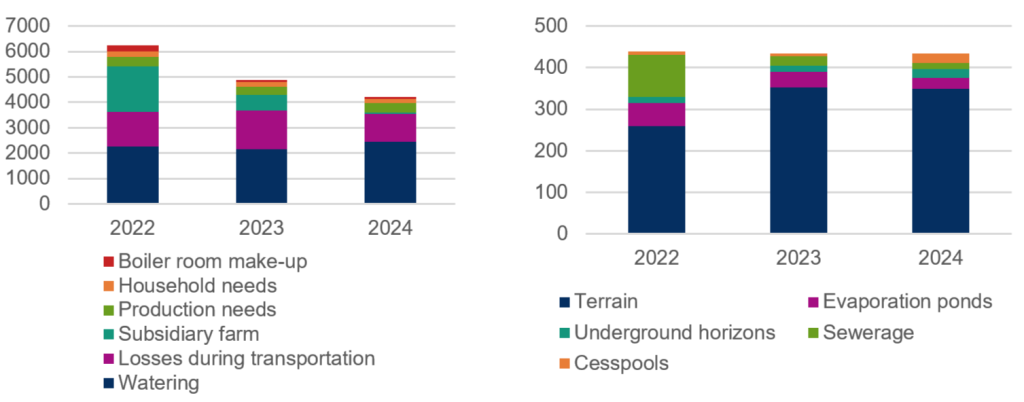
In 2025, a pipeline repair project at Urgenchtransgaz, which had previously been characterized by significant water losses, was completed. Following the repair work, the volume of losses is expected to be minimal. The pipeline not only ensures the uninterrupted operation of the enterprise but is also used by residents of nearby communities.

WASTE
The economic activities of Uztransgaz JSC are accompanied by the generation of waste. To prevent negative environmental impacts, the Company systematically plans and implements measures to minimize waste generation at production sites and ensures waste is transferred to licensed organizations for safe disposal and recycling.
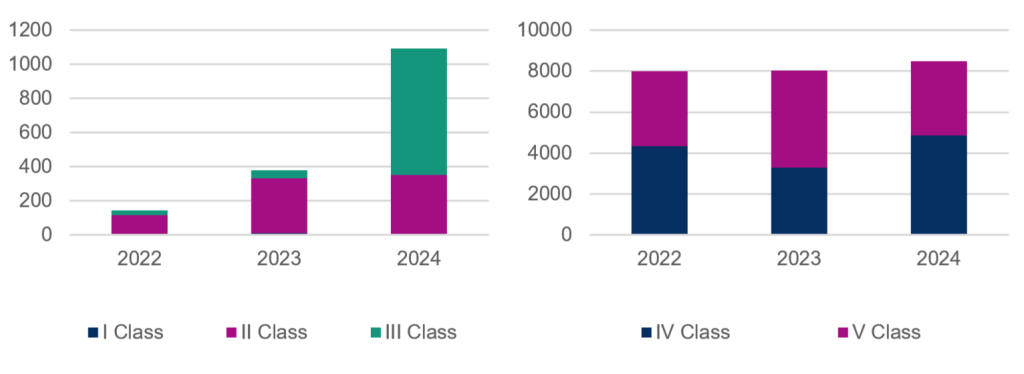
The generated waste is transferred to specialized licensed organizations for recycling and recycling. Most of Uztransgaz JSC's waste is classified as low-hazard and practically non-hazardous waste – ferrous and non-ferrous scrap metal, sent for remelting.

BIODIVERSITY
The gas transportation system of Uztransgaz JSC covers all regions of the Republic of Uzbekistan, each of which has unique flora and fauna, forming a valuable component of the biodiversity of the Central Asian region. However, there are no transportation or underground gas storage facilities in protected natural areas or adjacent territories.
In 2026, the Company plans to conduct biodiversity monitoring in the regions where it operates to determine the impact of its enterprises and, subsequently, assess environmental risks.